Wax melts are one of the most accessible craft businesses to start in the UK — low startup costs, equipment you may already own, and steady demand on Etsy, at markets and through social media. This guide walks you through every step: the kit you need, where to source supplies, the legal essentials, how to price for profit, and where to sell.
Why Wax Melts?
Compared with most product businesses, wax melts have an unusually low barrier to entry. You can begin from your kitchen with a starter budget of well under £200, there's no expensive machinery, and the materials are easy to source from UK suppliers. Melts are also lighter and cheaper to post than candles, and they let customers try lots of scents — which encourages repeat orders.
⚖️ Please note: This guide is general information to help you get started, not legal, tax, insurance or financial advice. Always check the current rules with official sources such as HMRC, the HSE and your insurer before you sell.
What You'll Need: Equipment & Supplies
Your starting shopping list is short. Most of it is inexpensive and much of it is reusable:
- Wax — soy, coconut-soy or a melt-specific blend (see choosing the right wax)
- Fragrance oils — candle-safe oils from a specialist supplier, with CLP information
- Clamshells or moulds — for snap bars and shaped melts (see packaging & clamshells)
- Digital scales — ideally accurate to 0.1g for weighing fragrance
- A heat source & jug — a microwave or a hob with a pouring jug or double boiler
- A thermometer — to pour at the correct temperature and avoid faults
- Dyes (optional) — if you want coloured melts (see colouring your wax melts)
- Labels & packaging — including your compliant CLP label
Sourcing Your Supplies
Buy from established UK suppliers so you get candle-safe materials and the documentation you'll need for compliance. Our supplier directory lists trusted UK retailers for wax, fragrance oils, dyes, equipment and packaging — filterable by category.
As your orders grow, buying in larger quantities lowers your cost per unit. Many suppliers offer trade or wholesale accounts — see buying wholesale vs retail for when it's worth switching.
The Legal Essentials (UK)
Wax melts are classed as a product placed on the market, so a few rules apply before you can sell. At a high level you'll need to:
- CLP labelling — your products need a compliant label showing hazard symbols, signal words, and the fragrance allergens, based on each scent and percentage
- Safety information — keep the Safety Data Sheet (SDS) and CLP data for every fragrance oil you use; many suppliers provide a free CLP calculator
- Poison-centre notification — hazardous mixtures may need to be notified to the appropriate body before sale
- Clear product information — net weight, your business name and address, and usage/safety warnings
Our testing & safety standards guide covers CLP, CPNP, lot codes and the latest UK regulation updates in more detail.
Insurance, Tax & Registration
- Register with HMRC — tell HMRC you're self-employed (a sole trader is the simplest start) and keep records of income and expenses
- Product & public liability insurance — widely recommended once you sell, and often required by craft fairs and stockists
- Data protection — if you store customer details, understand your responsibilities under UK GDPR
💡 Tip: Keep a simple spreadsheet of every purchase and sale from day one. It makes tax returns painless and shows you your true cost per unit for pricing.
Pricing for Profit
Many new makers price too low and forget to pay themselves. Work out your true cost per unit first — wax, fragrance, clamshell, label and a share of packaging — then add your time and overheads, and apply a margin.
A common starting point is to price retail at roughly 3–4× your materials cost, then sanity-check against what comparable UK makers charge. Keep wholesale (selling to shops) and retail (selling direct) prices separate — see wholesale vs retail.
Where to Sell
- Etsy — the fastest way to reach buyers searching for wax melts; low setup, but fees and competition
- Your own website — better margins and brand control (Shopify, Wix, or similar)
- Craft fairs & markets — great for feedback, cash sales and building a local following
- Social media — Instagram and TikTok suit wax melts well; pour and "melt" videos perform brilliantly
- Wholesale to shops — steady repeat orders once you have consistent products and packaging
Branding & Packaging
Strong, consistent branding turns a homemade product into a brand people remember. Decide on a name, colours and a simple logo, then carry them across your labels, packaging and social profiles. Your packaging choices protect the product and shape that all-important first impression.
Avoiding Common Pitfalls
Before you list anything, test thoroughly — cure your melts, check cold and hot throw, and fix any issues with finish. Our troubleshooting guide covers frosting, sinkholes, sweating and weak scent throw so your first batches look and perform their best.
Startup Costs
Indicative starting costs for a UK home-based maker (you'll already own some items):
| Item | Typical cost |
|---|---|
| Wax (starter quantity) | £15–£30 |
| Fragrance oils (a small range) | £20–£40 |
| Clamshells / moulds | £10–£25 |
| Digital 0.1g scales | £8–£15 |
| Thermometer & pouring jug | £10–£25 |
| Labels & packaging | £15–£40 |
| CLP / compliance | £0–£50 |
| Liability insurance | from ~£5/month |
| Typical starting total | ~£80–£200 |
Your First Steps
- Choose your wax and order a starter quantity from a trusted supplier
- Buy 2–3 fragrance oils to test, with their CLP information
- Pour, cure and test cold and hot throw before going further
- Sort your CLP labels and compliance for the scents you'll sell
- Register as self-employed with HMRC and arrange insurance
- Decide your brand, pricing and sales channel
- List your first products and start sharing on social media
Recommended on Amazon
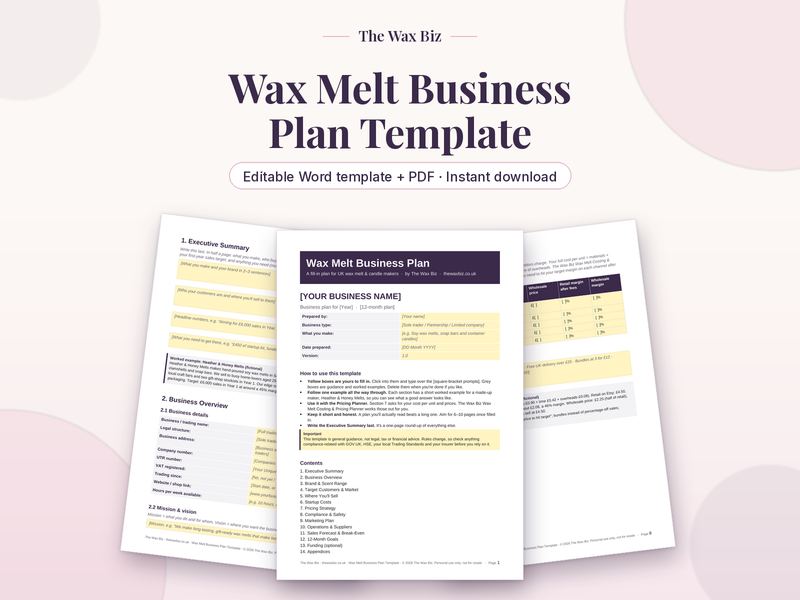 Plan it properlyBusiness Plan Template · £5.00A fill-in business plan written for UK wax melt makers, with a worked example.See it on Payhip →